Hearing loss and cognitive decline: what 50 cohorts and one randomised trial show
Pooled across 50 cohort studies and 1.5 million people, hearing loss carries a hazard ratio of 1.35 for incident dementia, rising 16 % per 10-decibel worsening. The one randomised trial of hearing intervention in older adults found a difference of 0.002 — and only in the higher-risk subgroup.
mixedStudies disagree, or the mechanism is contested.Revised
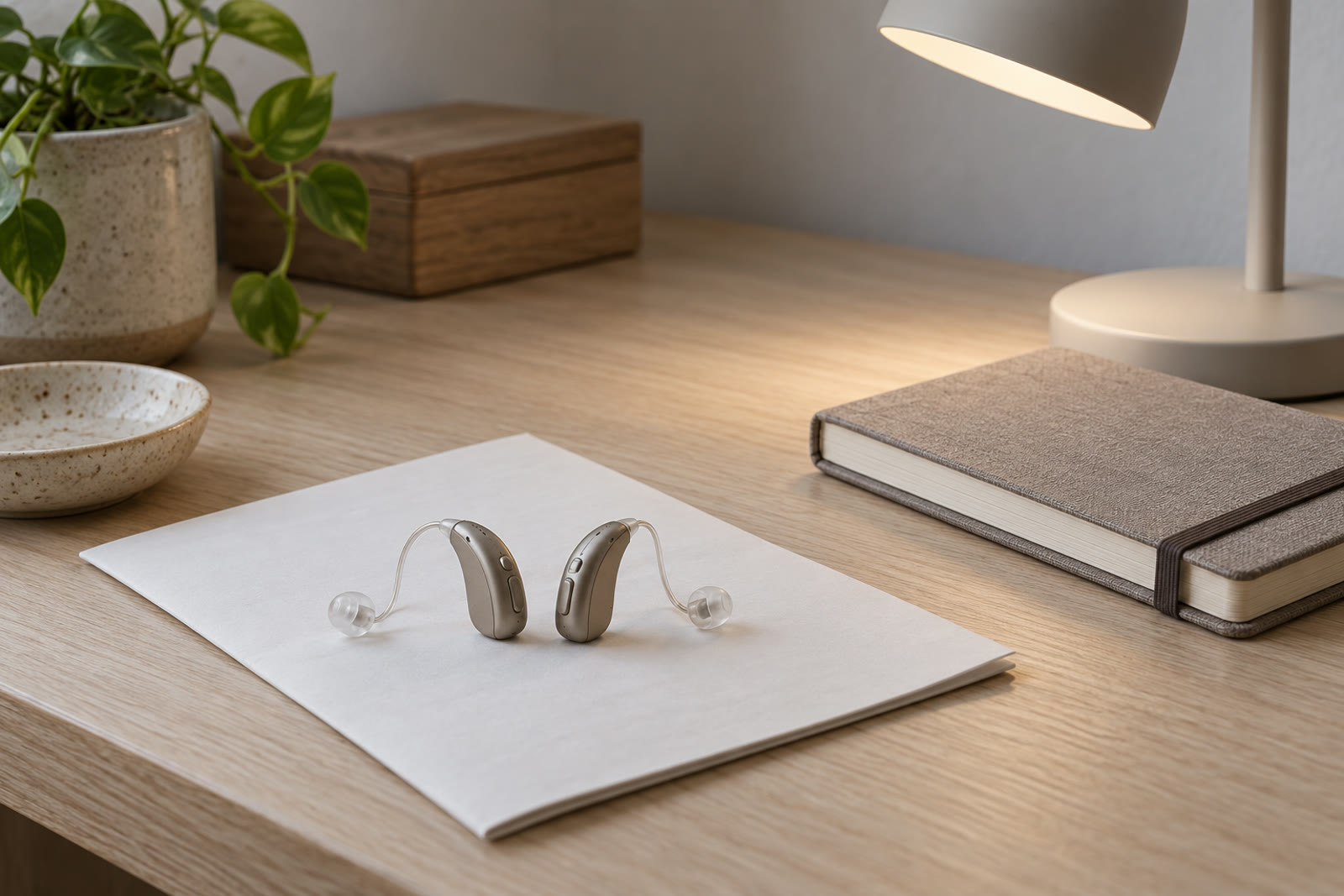
Fifty cohort studies point the same way. One randomised trial of 977 people points nowhere. Both are true, and only one of them is about cause.
The sensory risk factor with the largest pooled association in this literature is also the cheapest thing on this site to measure, and the two facts sit awkwardly next to each other.
The association is enormous and remarkably consistent. Fifty cohort studies, 1,548,754 people: hearing loss carries a hazard ratio of 1.35 (95 % CI 1.26 to 1.45) for incident dementia, and every 10-decibel worsening of hearing is associated with a 16 % increase in risk. Then there is the trial, the only randomised test of a hearing intervention in older adults ever run at this scale, 977 people, three years: the difference between the intervention arm and the control arm was 0.002 standard deviation units. p = 0.96.
Both of those are in the same literature. This entry is about how to hold them together.
What the pooled cohorts say
The 2024 meta-analysis is the most complete to date: cohort studies with participants free of dementia at baseline, hearing assessed at baseline, at least two years of follow-up, incident cognitive outcomes. Fifty studies, 1,548,754 people, random-effects models, subgroup and meta-regression analyses.
The results, endpoint by endpoint:
| Outcome | Pooled hazard ratio (95 % CI) |
|---|---|
| Incident dementia | 1.35 (1.26 to 1.45) |
| Mild cognitive impairment | 1.29 (1.11 to 1.50) |
| Cognitive decline, neither specified as MCI nor dementia | 1.29 (1.17 to 1.42) |
| Alzheimer’s disease dementia | 1.56 (1.30 to 1.87) |
| Vascular dementia | 1.30 (0.83 to 2.05) — not significant |
And the gradient: each 10-decibel worsening of hearing was associated with a 16 % increase in dementia risk (95 % CI 1.07 to 1.27). That last number is the one that should make an epidemiologist sit up, because a gradient is harder to explain away than a threshold. The authors also note that the effect did not vary across any of the potential moderators they examined.
An earlier meta-analysis, from 2018, using only studies with objective audiometry, found the same shape with an important difference in scale. In cross-sectional studies the association with dementia was OR 2.42 (95 % CI 1.24 to 4.72); in prospective cohorts it fell to OR 1.28 (1.02 to 1.59), and for Alzheimer’s disease specifically it was 1.69 with a confidence interval from 0.72 to 4.00 — not significant. Cross-sectional studies also produced stronger estimates than cohorts for cognitive impairment, 2.00 (1.39 to 2.89) against 1.22 (1.09 to 1.36). That gap between study designs is the standard signature of a real association diluted by measurement error in the harder studies, but it is also a warning: the alarming numbers usually come from the cheap design.
Why the correlation was expected long before it was measured
Hearing loss plausibly acts on cognition through several channels at once, and no single one of them is large enough to produce a hazard ratio of 1.35 on its own.
In 2013, the Health ABC Study followed 1,984 adults from a 1997–1998 enrolment, mean age 77.4, with audiometry in year 5 and cognitive testing in years 5, 8, 10 and 11. The 1,162 participants with hearing loss above 25 dB in the better ear declined faster on both tests: annual rates of decline 41 % greater on the 3MS and 32 % greater on the Digit Symbol Substitution Test, and a hazard ratio of 1.24 (95 % CI 1.05 to 1.48) for incident cognitive impairment.
That last measurement matters for interpretation. The Digit Symbol Substitution Test is a timed task with an auditory component; the 3MS is a global score. Hearing loss loads onto the first more than the second, and the two effect sizes are not identical. Part of what the cohorts measure is the measurement itself.
The second channel is social. The 2025 analysis of the China Health and Retirement Longitudinal Study put numbers on it: among 5,326 adults followed for a mean of 6.38 years, hearing loss carried an adjusted hazard ratio of 1.24 (95 % CI 1.06 to 1.46) for cognitive impairment, and 20.83 % of that association was statistically mediated by depression and 4.17 % by social isolation. More than a fifth of the association ran through mood and a few percent through loneliness. So roughly a quarter of the association runs through mood and loneliness — which puts it in the same neighbourhood as the social connection literature on this site, and it also means an intervention aimed at the ear and an intervention aimed at the isolation are not the same intervention.
The trial, which is the paper that matters
ACHIEVE is the reason this entry is not simply a list of hazard ratios.
Between November 2017 and October 2019, 3,004 adults aged 70 to 84 with untreated hearing loss and without substantial cognitive impairment were screened across four US community sites, and 977 were randomised: 490 to a hearing intervention (audiological counselling and provision of hearing aids) and 487 to health education. Mean age 76.8, 54 % female, 88 % white. The primary endpoint was three-year change in a global cognition standardised score, analysed by intention to treat.
The result: −0.200 standard deviation units (95 % CI −0.256 to −0.144) with the hearing intervention, −0.202 (−0.258 to −0.145) with health education. Difference 0.002, 95 % CI −0.077 to 0.081, p = 0.96. Everyone declined. The intervention did not change the slope.
The prespecified subgroup analysis is the whole argument. The effect differed between the two recruitment populations, interaction p = 0.010. One group came from ARIC, a long-standing cardiovascular cohort — older, more risk factors, lower baseline cognitive scores. The other was healthy community volunteers recruited from scratch. The authors’ own reading: a hearing intervention might reduce cognitive change over three years in populations at increased risk, but not in populations at decreased risk.
Read that carefully. It is a subgroup of a null trial. Subgroups of null trials generate hypotheses, not findings, and this one was prespecified, which is why it is worth taking seriously rather than treating as a post-hoc rescue. But nobody has replicated it, and until somebody does, the correct entry in your notes is “null overall, signal in the higher-risk subgroup, needs replication”.
What the data do not show
They do not show that treating hearing loss protects the brain. The only randomised evidence is the 977-person trial, and its primary endpoint was a coin flip. Everything else is observational, where the usual suspects apply: people who lose hearing also lose social contact, stop going out, and carry vascular and depressive comorbidity that the models adjust for with varying success.
They do not show a mechanism. No cohort study can separate the three candidate channels — reduced auditory input, social withdrawal, and shared vascular pathology — and none of the mediation estimates above is a mechanism finding. The 20.83 % depression figure is a statistical decomposition of an association, not a demonstration that addressing hearing loss addresses depression.
They do not show anything for vascular dementia. 1.30 (0.83 to 2.05) is not a finding, and the confidence interval is wide enough to include both a small real effect and no effect at all.
They do not generalise past the study populations. ACHIEVE was 88 % white, community-based, in the United States, and recruited participants willing to be fitted with hearing aids. The CHARLS analysis is Chinese and self-reported on hearing. The pooled meta-analysis covers 1.5 million people across 50 studies whose exposure measurement ranges from pure-tone audiometry to a self-report question.
They do not show that hearing technology improves anything. No trial in this set measured quality of life, social participation, or mood as an outcome. The only trial measured cognition, and found nothing.
What is worth keeping
Two things survive the reading.
The gradient is real and graded across the range, which is why a hearing test belongs in a general health check rather than in a specialist’s office. Everything on this site that measures a modifiable risk factor — gait speed, grip strength, the chair-stand test, oral health — has that same structure, and this one is measured in decibels.
And the trial is a reminder about how this literature works. Fifty studies with 1.5 million people point one way; 977 randomised people point nowhere. Both numbers are honest. The second one is the one that constrains what you are allowed to promise anybody, which is exactly why it is worth reading before you promise yourself anything at all.
Sources
- Ageing Res Rev 2024 — Adult-onset hearing loss and incident cognitive impairment and dementia: a systematic review and meta-analysis of cohort studies (PMID 38788800, 50 cohort studies, 1,548,754 participants, random-effects models with subgroup and meta-regression; hearing loss associated with incident dementia HR 1.35 (95 % CI 1.26 to 1.45), mild cognitive impairment HR 1.29 (1.11 to 1.50), Alzheimer's disease dementia HR 1.56 (1.30 to 1.87), vascular dementia HR 1.30 (0.83 to 2.05, not significant); each 10-decibel worsening of hearing associated with a 16 % increase in dementia risk, 95 % CI 1.07 to 1.27)
- Lancet 2023 — Hearing intervention versus health education control to reduce cognitive decline in older adults with hearing loss in the USA (ACHIEVE): a multicentre, randomised controlled trial (PMID 37478886, 3,004 adults aged 70-84 screened, 977 randomised, 490 hearing intervention and 487 health education control, mean age 76.8 years, 54 % female, 88 % white, four US community sites, 3-year change in a global cognition standardised score; intervention −0.200 (95 % CI −0.256 to −0.144) versus control −0.202 (−0.258 to −0.145), difference 0.002 (−0.077 to 0.081), p = 0.96; prespecified subgroup interaction p = 0.010 between the higher-risk ARIC cohort and the lower-risk de novo cohort)
- JAMA Intern Med 2013 — Hearing loss and cognitive decline in older adults (PMID 23337978, Health ABC Study, 1,984 adults with a mean age of 77.4 years enrolled from 1997-1998, audiometry in year 5, six years of follow-up, testing in years 5, 8, 10 and 11; the 1,162 with baseline hearing loss above 25 dB had annual rates of score decline 41 % and 32 % greater on the 3MS and Digit Symbol Substitution Test; hazard ratio 1.24 (95 % CI 1.05 to 1.48) for incident cognitive impairment)
- JAMA Otolaryngol Head Neck Surg 2018 — Association of Age-Related Hearing Loss With Cognitive Function, Cognitive Impairment, and Dementia: A Systematic Review and Meta-analysis (PMID 29222544, 40 studies from 12 countries, 36 unique studies and 20,264 unique participants in the pooled analyses; cross-sectional dementia OR 2.42 (95 % CI 1.24 to 4.72), prospective cohort dementia OR 1.28 (1.02 to 1.59), Alzheimer's disease OR 1.69 (0.72 to 4.00, not significant))
- BMC Public Health 2025 — Hearing loss and cognitive impairment among older adults: findings from the China health and retirement longitudinal study (PMID 40307727, 7,891 adults in the cross-sectional analysis and 5,326 in the longitudinal analysis with a mean follow-up of 6.38 years, hearing loss self-reported; adjusted OR 1.76 (95 % CI 1.49 to 2.08) cross-sectionally and HR 1.24 (1.06 to 1.46) longitudinally; 20.83 % of the association mediated by depression and 4.17 % by social isolation)